


.svg)
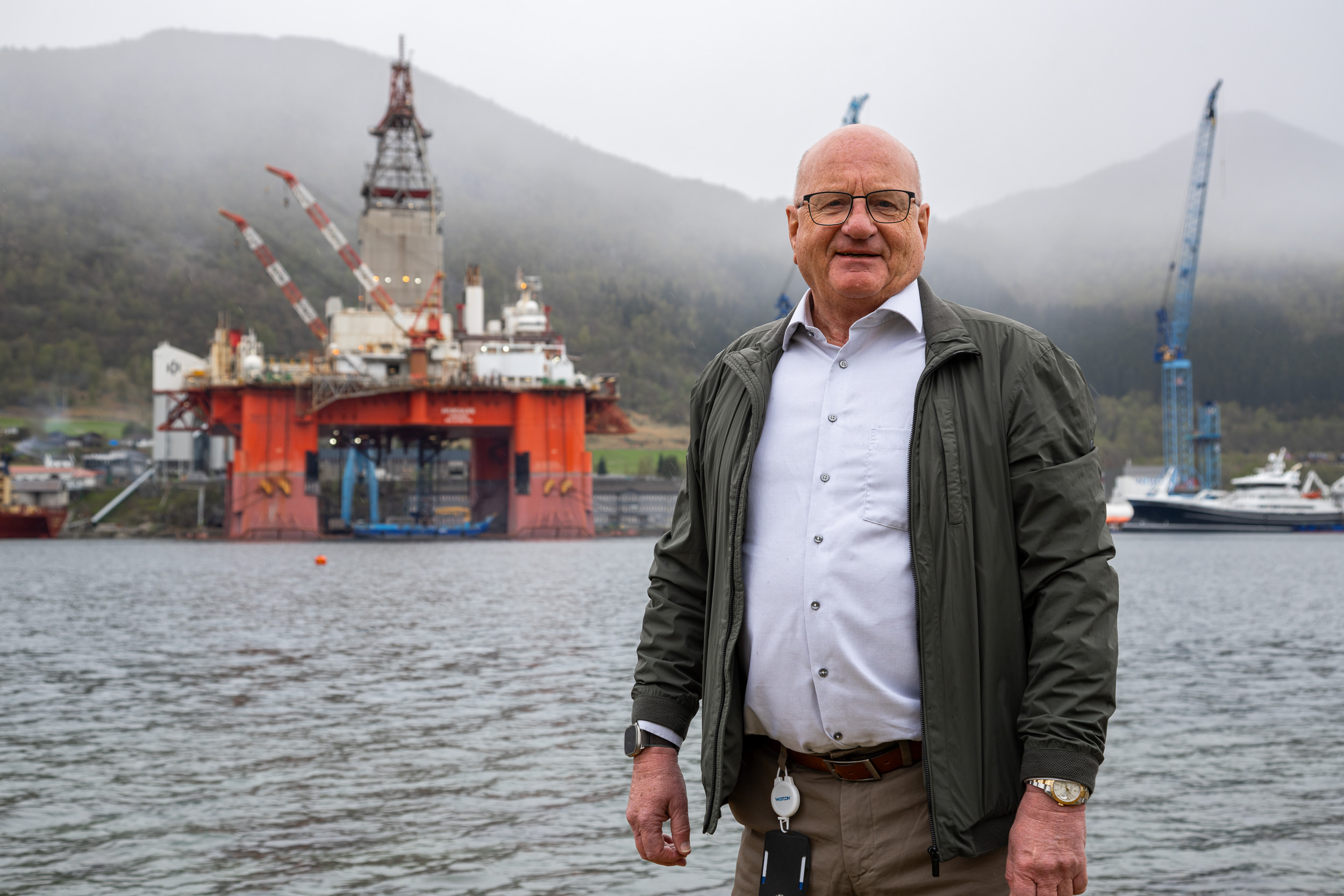


Many stories are embedded in the walls of Ølen – about people who built brick by brick, found solutions when faced with challenges, and shaped what is now Westcon. Arne Matre is one of them.
Here is his story:
It is now, these days, 50 years since I graduated as a Naval Engineer. The English title is far more descriptive of what the profession truly entails; "Naval Architect" is a much more accurate name. An architect assembles many different things and systems so that they fit together, technically, functionally, and economically. For a ship, this means assembling the vessel in a way that serves the shipowner in the best possible manner, at a price the shipowner is willing to pay for the features he has requested.
To achieve this, one needs to know:
One must be able to design the ship to meet regulatory requirements, construction requirements, cargo capacities, and all other weights a ship comprises, as well as the necessary capacity for bunkers, fresh water, and ballast required for stability and the ship's seakeeping characteristics. Today, this is done using digital tools, but 50 years ago, all of this had to be done manually. Not just theoretically, but one had to understand how a ship functions in practice.
I was fortunate to grow up with ship repairs and conversions. This gave me an early understanding of how ships are constructed, and from a young age, I had gained a framework for my knowledge when I began my studies. Many of my fellow students had no prior experience with ships and probably struggled a bit more than others to form an impression of how a ship is put together and functions as a system. Real-world experience proved to be an invaluable complement to textbooks.

I began my professional life in July 1976 with 16 months in the Navy, 10 of which were as a 2nd Engineer. This involved responsibility for the operation and maintenance of machinery and technical systems on board. The Armed Forces had – and still have – a very well-structured system for planned maintenance, with clearly defined intervals and routines for all equipment and machinery. This early experience provided a thorough understanding of systematic approaches and discipline in technical operations.
Before we were assigned to a vessel, we had 6 weeks at Madla camp and a 4-week intensive course on the operation of engines and technical equipment installed on board the MTBs. In addition, I also took a course in operations and production planning while on board, which provided useful insight into the connection between routines, planning tools, and learning to lead people you don't know. That has also been a valuable experience to have.
I was very keen to acquire new knowledge based on my education and the operation of the workshop in Ølen, which at the time was called Ølen Skipsindustri AS. Therefore, I got a job at a naval engineering consulting firm located in Karmøy. There were only three of us, and I was the only naval engineer there. My boss was a mechanical engineer and had worked building boats at a local shipyard before starting his own business. The company's name was WestConsult AS. There, I got to perform all the tasks a naval consulting firm does, and the learning curve was steep.
I was involved in the final stages of Røverfjord; preliminary theoretical stability calculations had previously been submitted to the Norwegian Maritime Authority.
I had participated in these tests, where weights were shifted and heel angles were read. I also had to perform the calculations myself, as well as submit the final calculations to the Norwegian Maritime Authority and get them approved – so that the ship could go on its sea trial a few days after the tests were completed. I was alone in this; my boss was on vacation, and there was no one else I could ask for help. I worked through the next few days and all night to get everything in order; I processed the test results, corrected the theoretical calculations that had been submitted in advance, and ensured everything was returned with approval in time for the planned sea trial to proceed.
The sea trial tests also proved to be very educational. They provided valuable insight into the connection between theory and practice, and how calculations actually play out in real-world conditions.
In short, a theoretical book is created containing all systems to be tested. Everything from seawater, freshwater, cooling, lubricating oil, ballast, high-pressure, and fire systems are checked and tested. For electrical and signal systems, this is done together. Additionally, it is determined which systems to test before the sea trial and what to test after departure for the sea trial.
Later in my career, I led many sea trials, but this first, thorough review provided a particularly strong professional foundation that has served me well throughout my career.
In larger companies, tasks are often more specialized; some are experts in calculations, while others are experts in stability. The training system has also changed, with a greater degree of specialization within defined areas.
All these technical experts are brought together, and eventually, for example, a ship is built.
My experience was different. We worked with small vessels, and I had to learn the entirety of how a ship functioned. This has been a valuable asset in larger projects later on. Having worked through the entire processes myself provides a deeper understanding and a better basis for seeing connections and assessing consequences across different disciplines.
____
On July 1, 1979, I started working in Ølen. My work primarily involved calculating bids for various jobs, as well as drawing and designing solutions. If we won a job, it was usually the same person who became the project manager and foreman, responsible for progress, coordination, and practical follow-up on site. After completing the assignment, it was then a matter of compiling the final invoice. This meant I followed projects from the initial estimate to the completed job. This experience provided a holistic understanding of the connection between technical solutions, economics, execution, and responsibility, and has been a very useful foundation throughout my career.
________
In 1978, requirements for the certification of ship cranes were introduced. I thought this could become an important field to master, and I saw the value in being able to obtain approval myself to perform such certification. I therefore submitted an application to become certified.
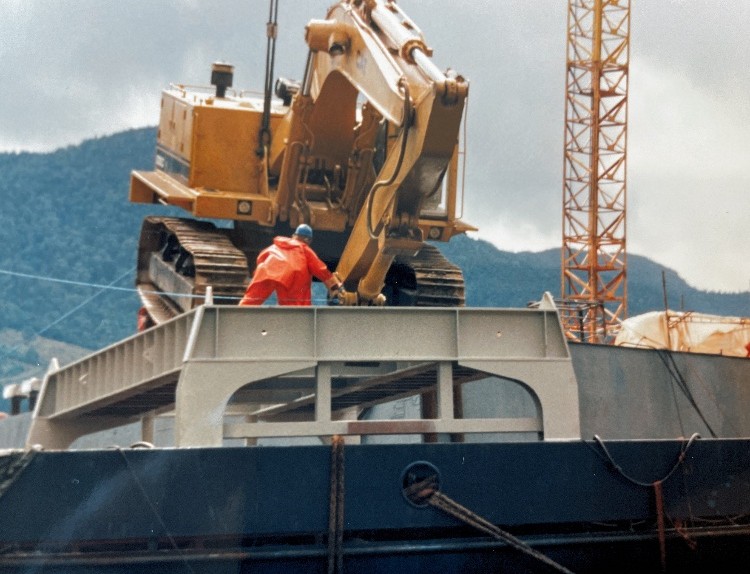
Coincidentally, at that time, a new construction project was underway at "Ølen Skips" where the vessel was to be equipped with a new crane with a lifting capacity of 45 tons. I was given responsibility for the entire process; performing all calculations, drawings, and equipment lists, as well as securing the crane to the hull, and additionally ensuring safety during crane operation, both constructively and operationally.
This work resulted in me being approved as a Type A expert, which gave me the right to certify all types of cranes on board ships. I also received approval from the Norwegian Labour Inspection Authority to carry out this certification on land.
Even before the Norwegian Maritime Authority introduced the new regulations, I had designed and calculated the first gantry with an excavator. In Ølen, we were the first in the country to implement these solutions for ships transporting sand and asphalt. We developed them to have their own drive with chains along the hatch, as well as the possibility of lateral movement. The first boats to receive this were small, and the machines were used. The experiences were good, and it wasn't long before new machines were installed on board. Eventually, it turned out that larger ships could also greatly benefit from this type of solution.
Today, we see that this work was a great success. This type of crane is now found on almost all "self-unloaders" worldwide, and it's fascinating to see how the solutions developed early in Ølen have spread throughout international shipping.
_______
Ølen Skips had an agreement with Aker Stord – as it was called then – to build the superstructures for the supertankers produced there. The superstructures were built floor by floor, as separate modules, before being transported and assembled onto the vessels at Aker Stord.
Then came the oil crisis in the 70s, and the market changed rapidly. Order books dried up, and the construction of new supertankers ceased. Consequently, the production of superstructures also stopped.
Fortunately, oil activity had begun to pick up, and there was a significant need to build various steel structures. New types of steel were introduced, and at the same time, requirements for welding execution and documentation became stricter than before. Several serious incidents in the North Sea had led to major casualties, and both the industry and authorities recognized the necessity of raising competence in welding and construction.
Therefore, in 1982, I took courses and trained as a welding engineer. In 1993, I pursued further education that gave me the highest qualification in welding. Today, several people at Westcon have the same qualification.
This expertise has been of great importance, both for me personally and for the company, and it has enabled us to meet increasingly stringent demands from customers and authorities.
Parallel to this professional development, technological advancements also emerged. As early as 1985/86, as far as I can recall, we purchased our first AutoCAD system and plotter. These were supplied by Sigmund and Tor Erling Lunde, who had jointly founded a new company, a company we now know as Omega. The computer had a storage capacity of 364 MB; it was so slow that we could literally watch lines being drawn on the screen just by adjusting the image size. I used this machine to create the first AutoCAD drawings.

_______
In 1982, the Statfjord hook-up was underway in Vatsfjorden. Ølen Skipsindustri, Etne Sveis, and SMV in Skånevik joined forces for the assignment, providing certified welders and plate workers. I participated as a welding foreman – both because the need was there and because I wanted to gain a deeper understanding of that industry.
Concurrently, it was decided that Kårstø would be developed as a refinery for North Sea gas. The feedback from the Operator Company and their main supplier, Linde, was unequivocal: individually, we were too small for such assignments. Those of us who had collaborated during the work in Vats believed the solution was to merge. Together with local companies in Tysvær, we established a joint venture that could serve as a local supplier for the construction of the Kårstø facility. We also partnered with a Swedish company to access their specialized expertise and workforce.
Jønsson became the site manager for Westcon, and our first assignment was to supply labor for the construction of two out of six storage tanks for liquefied gas. My background as a welding engineer proved invaluable here. The stringent requirements for welding steel designed to withstand temperatures as low as minus 160 degrees necessitated robust solutions in terms of material selection, procedures, and quality control.
I served as project manager for our work on the tanks and was also responsible for maintenance tasks on rotating equipment, including pumps, electric motors, and turbines. A crucial part of the job was also to inspect for any potential damage that might arise during the period leading up to the facility's commissioning.
Once the work was completed, the German site manager for Nüll – who held primary responsibility for the tank construction – provided a brief summary of the welding quality. The results were clear: 94% of the welders who worked through us passed the site tests. In contrast, another supplier, who had not invested in training their welders, only had 67% pass similar tests. We assisted Nüll with all necessary equipment as requirements emerged, and they were very pleased with our contribution.
Working on a facility of this magnitude, while simultaneously holding a leading role, offers unparalleled insight into the practical workings of large industrial projects. It allows one to accumulate a significant amount of experience and knowledge, which proves highly valuable in subsequent endeavors.
Over time, Westcon secured several different assignments at Kårstø. Among these, we constructed two flare stacks. One was a double flare stack, designed for two flames to burn simultaneously. I recall this tower being approximately 65 meters tall, while the other flare stack reached an impressive 94 meters.
The flare stacks were assembled in sections in Ølen, while Etne and SMV manufactured the components.
One day, I received a call from Ølen. Our top welder had a weld rejected on a pipe intended to support the weight of the gas line leading up to the flare stack. The conditions were challenging, making it difficult to properly inspect the weld. In some areas, welders even had to use mirrors to see what they were doing. The question was how I could assist them. I was informed that these were the most stringent welding requirements due to it being a gas pipe. My assessment, however, was that this was not the gas pipe itself, but rather a support for it.
I convened a meeting with Statoil's representative from Linde, the inspector who had conducted the check, and DNV, who was responsible for approving the weld. First, the inspector detailed his inspection process, the specific welding requirements, and how he had determined he was inspecting a gas pipe. I then asked each individual if they considered it a support – and everyone confirmed that the support was indeed a pipe, merely a practical design choice for the support structure. My next question was whether the incorrect table had been used to determine the inspection requirements for the weld. The final question posed was whether the inspected weld met the requirements for a support. Everyone answered yes, and the meeting was concluded.
_____
Another project involved the construction of eight fire and deluge towers. These were designed and built by SMV, concurrently with other smaller tasks. Before these fire towers were erected, they were sandblasted and painted, then covered with approximately 5-6 cm thick fire-retardant insulation, which resembles finely cast concrete.
During the final approval, however, a serious problem emerged: it was discovered that the attachment lugs, which had been installed after sandblasting and painting, had not themselves been sandblasted and painted. Consequently, Linde and Statoil rejected the fire towers. Their assessment was that the missing surface treatment could lead to rust expansion and water ingress beneath the fire insulation, posing a risk of the insulation detaching from the fire tower.
I received a call from SMV regarding this unfortunate news, and I recall SMV had been quoted 2 million kroner per tower to remove all insulation, erect scaffolding, wrap the tower in tarpaulins, sandblast, paint, and then re-insulate. This amounted to a total cost of 16 million kroner.
I obtained the contact names at Linde and Statoil and initiated a meeting with their representatives, the insulation contractor, the painters, and the fire insulation expert.
My proposal was to opt for a more targeted and technically sound solution: we would remove a limited section of insulation, approximately 0.3 x 0.3 meters around each attachment lug, then treat the concrete edges to prevent water absorption, and ensure the seal was watertight. Everyone agreed that we had devised an excellent solution that all could endorse. This approach undoubtedly saved us 10-12 million kroner, while still satisfying all requirements.
Scaffolding was in use on all the tanks, and it was standard practice to use wooden planks for the platforms. One day, all work at height on every tank was halted. The safety representative had discovered that the planks Nüll was using were 2 inches thick, whereas the Norwegian requirement was 2 ½ inches. Germans aren't always the easiest to deal with when they encounter setbacks. Coincidentally, my father, Georg, had previously acquired all the scaffolding, including planks and pipes, from a defunct shipyard in Haugesund. I called him and asked if he could supply scaffolding planks for our project. Georg then informed me that he had just loaded a truck with scaffolding planks in Haugesund and was already nearing Aksdal. I simply asked him to divert directly to Kårstø. A couple of hours after I learned about the scaffolding issue, we delivered the planks to Nüll. Following this, we at Westcon became the project manager's favorites (I no longer recall his name). I invited him back to Norway, but his response was that he would never return to a place with such weather conditions.
Subsequently, we had personnel at Kårstø for many years, primarily related to safety and lifting equipment inspection. This work gained particular importance after a crane overturned at Kårstø, and even before this happened, we had, for several companies at the facility, inspected and carried out necessary checks prior to the approval of lifting equipment. After the inspections, we issued Norwegian certificates. Additionally, we undertook certification assignments both onshore and offshore, based on my approvals granted by the Norwegian Maritime Authority and the Norwegian Labour Inspection Authority.
Eventually, the volume of work became so large that I could no longer manage it alone. The solution was to assemble some of our best specialists, individuals with solid expertise in lifting and mechanics, and utilize them as my inspectors. We developed inspection forms, defined the scope of inspections and procedures, ensuring the work complied with requirements from authorities and clients. At the same time, a dedicated person with extensive knowledge was brought in to administer and sell lifting equipment services. We gained many clients, and Westcon Løfteteknikk was born. From day one, WCL has had strong leadership and a great journey.
______
There was some reorganization and change of ownership at West Contractors, and eventually it became a family business for the 2nd generation after Georg Matre.
____
In 1986 and 1988, I was involved in car accidents, and I've struggled with the injuries ever since. My neck and back have been operated on three times, which has helped somewhat. I received an insurance payout and used it to travel to Finland and purchase a cutting table with plasma torches. These could cut underwater, which eliminated both smoke and noise.
It turned out that a new water tank for the table had to be ordered, at a cost of around 1.5 million kroner. Instead, I sat down and designed my own water tank, based on the same principle, at a cost of a few hundred thousand kroner. Later, I was reimbursed for the money I had spent on the cutting table.
______
For many years, I had tried to establish a lay-up facility for drilling rigs, but I met resistance. Skånevik and Ølen Power Company would not consider a drilling rig as a unit with its own power supply. With standard electricity prices and grid rental fees, the costs became too high, and we were therefore not competitive.
In 1993, we got electricity for the platforms, and the same applied to the new dock, which had generators on board. Following the revenue from Kårstø, we began the work of leveling Bergsneset.
We bought all the equipment from a defunct shipyard in Stockholm, including two 40-ton cranes with a high lifting height and good radius by the standards of the time. The cranes arrived in parts, and before assembly, we sandblasted and painted both. The work was carried out on the new, roughly graveled area.
Together with our sales manager, I traveled around and visited all the rig owners represented in Norway. We bid on several tenders, but didn't get any of the first jobs.
In January 1994, we finally got a bite. A shipping company had platforms in lay-up at Halsnøy, and their technical manager wanted to come and see our facility.
At this point, the cranes were still in parts, the area was only roughly leveled, and we lacked temporary office facilities. I picked up the technical manager at Bjoa, and we drove to Westcon in Ølen. About 30 cm of fresh snow had just fallen, so the rough gravel was well hidden.

After discussions and inspection, he called home to Sweden and reported that he had seen a great facility, with only a little work left before everything was complete. He also believed that the facility would be ready in time, as "the great Norwegian Public Roads Administration" was behind it. The company that actually did the work was Veidekke. I said nothing.
Shortly after, it was confirmed that Safe Britannia would be coming to Ølen. To be able to compete with other Norwegian shipyards, it was crucial that everything was done properly. In advance, I had all the bollards calculated, inspected, and approved by DNV. We had also arranged for the crane to reach over the rig with maximum lifting capacity.
The distance from the quay was short, and later we reinforced the quay pillars so that the rigs could be secured against the quay with our self-developed fender system. It requires regular maintenance, but in return, we avoid damage to the quay pillars.
I remember the first rig well. In advance, I contacted an experienced skipper who had participated in many rig moorings. I traveled to him, and together we created a mooring proposal that was sent to the shipping company and approved. I then prepared a detailed procedure for arrival and mooring, with both text and drawings, step by step until the rig was fully moored.
Together with the skipper, I also had a meeting with the pilots in Haugesund. They had not previously guided a rig into Ølen and were therefore a bit uncertain about the approach. It was agreed that I would accompany the pilots on board Safe Britannia and observe the approach.
On Sunday, April 17th, we flew by helicopter from Karmøy out to the rig, which was then located northwest of Røvær. The tow was performed by Lunde Junior, and the rig also used its own propellers. It remained in the fjord until the next day before heading to the quay. We had to wait a few minutes for the last mooring point to be completed because the asphalt around the bollard had not yet been laid.
For the first rigs, I personally developed all the mooring procedures. At that time, all rigs had four anchors deployed, and therefore, many chains had to be correctly positioned relative to other rigs anchored in the area.

_____
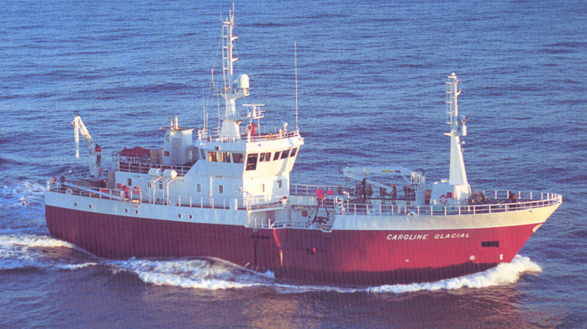
We were in Ålesund, where we bought an old longliner which we considered converting into a modern longliner for toothfish fishing in the Southern Ocean. Investors in Bergen liked the concept but instead chose to order two new 44-meter longliners, with an option for two more, potentially larger vessels.
We designed the general arrangement ourselves. At that time, modern longliners had a shelter deck, as well as a poop deck and a forecastle, but this provided too little internal space when there were to be around 40 men on board. I therefore suggested building the vessels with three decks, without a poop deck and forecastle. The solution worked very well, and since then, all new longliners built in Norway have been constructed with three decks.
Our employees had the most experience with repairs and conversions, not new builds. In a new build – especially one that is custom-designed – the placement of equipment, pipes, cable trays, and ventilation must be built from scratch. To ensure good quality, I therefore created sketches and drawings that showed how the pipes should be laid, the direction of flow, where supports were needed, as well as which valves should be used and where they should be placed.
In this way, we gradually built up expertise among foremen and skilled workers.
____
A new school reform was introduced that brought schools and industry closer together. Based on this, we collaborated and established the Indre Haugaland Training Office.
I argued that the theoretical part for apprentices was largely common – about 90 percent was the same for all trades. The remaining part was so limited that it could also be addressed within a common model. Our training office was therefore approved as a common office for all types of apprentices, and the way we established this was later used as a template for many other similar training offices.
_____
We bought a fishing vessel, a factory trawler, from Nigeria. I traveled there and inspected the vessel, and then spent about a month getting all the paperwork approved and outstanding directives cleared. There are many experiences from this that are too extensive to go into here.
The plan was to convert the vessel into a bottom seismic vessel. The vessel was towed towards Norway, but along the way, oil prices dropped sharply, and PGS decided to cease operations. Thus, the project was halted.
The vessel remained with us for several years before we finally got a new project that allowed us to convert it back into a modern freezer vessel.
_____
We have built many vessels in the period from 1993 until today, approximately 30 ships in total. I was involved in the first ones, not as a project manager, but more as a facilitator for solutions and implementation. Now, projects are delivered fully specified in detail by consulting firms; all work that can be done in a low-cost country is carried out in a low-cost country. Construction costs in Norway have now become so high that even more will choose foreign shipyards, and there, they will also complete the ships entirely.
In recent years, I have developed my own system for closed aquaculture, which we have marketed as Westcon Hexacage. We haven't managed to sell the system yet.

____
About Westcon Property
Westcon Property started with a workshop area of around 20,000 square meters. Today, this has grown to approximately 150,000 square meters. The development has involved several processes and discussions with the municipality, particularly related to the re-zoning of agricultural land to industrial land.

I particularly remember when I presented a plan to the municipality where I had drawn the industrial area all the way up to the main road, from the area we occupied at the time. We had also bought the cabins located down by the beach in Jektevika. The response was marked by skepticism – they laughed and said we would never need that entire area, half the way up would be enough.
Another memorable encounter with the municipality occurred when we had purchased an office building that could be lifted and moved by crane. For some reason, the building was placed 40 cm too close to the welding hall. The requirement was a minimum distance of eight meters between the buildings, as well as a concrete wall and an A-60 type fire door. This resulted in visits from the mayor, municipal manager, and municipal engineer, who instructed us to install fire sprinklers in both the welding hall and the office building. The next day, we started jacking up the building at 7:00 AM, and by 9:30 AM, the house had already been moved the necessary 40 centimeters – enough to avoid the sprinkler requirement.

In 1995, we were looking for a floating dock. The Contracting department had been sold, and we received an offer for a dock that was for sale in Arkhangelsk, Russia. Øystein and I traveled there to inspect it, but quickly realized it was neither in good enough condition nor large enough for our needs. However, the shipyard had two newer docks, but they were unwilling to sell them, even though we expressed interest in the largest one.
In the same area, there was also a construction crane in parts. We received information about its size and quickly understood that this was a crane similar to the one at Stord. We bought it for a reasonable sum, thinking it could be used at the rig quay. That didn't happen, and after a few years, the crane was sold to a company in South Korea. Instead, we had a new type of crane designed, delivered by Krøll-Crane in Denmark.
Together with Ølen Betong and Sandfrakt, we purchased the old Tele building in Ølen town center. Part of the plot was located on the opposite side of the river and formed the basis for further utilization of the municipality's reclaimed area over the riverbed. The company established in connection with this purchase was Ølen Eiendom AS, where I became the general manager. I then contacted other shop owners in Ølen town center to see if they wanted to participate in establishing a joint, smaller shopping center. We succeeded in this. The property was sectioned, including Samvirkelaget, Ølen Bokhandel, and Ølen Eiendom AS, which in turn further sectioned it to other tenants. Ten apartments and 400 sqm of office space were established on top of the building. The building was completed in 2002.
Today, Westcon Eiendom AS owns several properties, both through ownership and leasing, and has varied activities within shipyards, industry, and office operations. In total, the company now manages over 30 hectares.

_____
A brief summary after 50 years must include the most important aspect, which is all the colleagues I've had throughout these years.
I remember that Monday in 1973 when, as a 17-year-old, I had to welcome over 20 new employees at Ølen Skips and select a foreman who would become the workshop manager at Skipsen.
I have had a life full of challenges throughout all my years in the workforce. I won't deny that the injuries I sustained in the car accidents in 1986 and 1988 have affected my life for the past 40 years. However, the good relationship we've had, both during my time at Ølen Skips and now at Westcon, has allowed me to function nonetheless. It has been inspiring to participate in the development that has taken place here in Ølen and Vindafjord, which is actually talked about throughout Norway.
I would have liked to have more time to be more social, but I've had to listen to my body and choose what was right for me – and for me, that meant sacrificing social activities.
The most important thing has probably been Grete and our four daughters, seeing how all the girls have started their own families. They remember a father who mostly worked or lay at home in pain, preparing for the next workday. The girls were shushed so I could sleep off the pain. It was likely a tough time for the whole family. I have probably become a family man, and that's natural when you want to cherish all the good times you've had and continue to have with your loved ones.

We acquired a house in warm Spain and had our mountain cabin modified. This has led me to take more time off, and it has helped my health over the past 7-8 years.
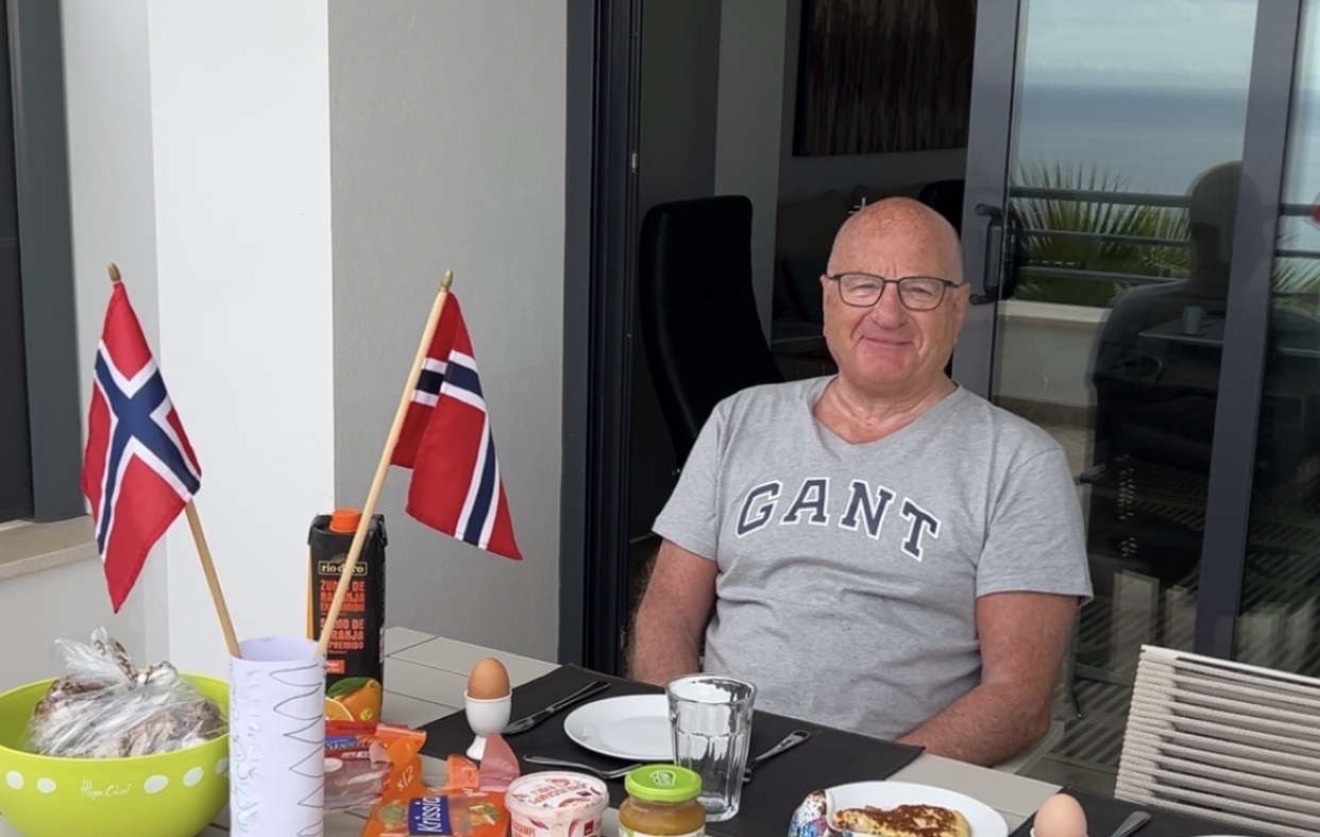
I owe Grete a great deal of thanks for her patience and for putting up with me. I sometimes wonder how I would have managed without her.
Everyone who knows me knows I'm full of stories from my long working life – I've tried to avoid getting into any of them here. I'll save those for private gatherings late in the evening, or eventually with our now 14 grandchildren who haven't heard so many stories yet.
Finally, I want to once again thank all colleagues, my mother, brothers and sisters, client representatives, shipowners, employees in partner companies, classification societies, and authorities with whom I have collaborated. No one mentioned, no one forgotten.
This has turned into almost a farewell speech, but I actually have two years left until I reach retirement age. My current problem is my back, which has failed me again – and I'm now going for treatment that can help me with the issues I'm currently facing. I expect to be back at work in the first or second week of June.


